What if a beach community felt just as thoughtful on an ordinary Tuesday as it does on vacation? That is part of what makes Rosemary Beach stand out. If you are considering buying here, visiting often, or simply trying to understand the appeal, it helps to see how the architecture and town plan shape daily life. Let’s dive in.
Why Rosemary Beach Feels Different
Rosemary Beach was conceived in 1995 as a 107-acre Gulf-front community along Scenic Highway 30A. Its original master plan was shaped by Andres Duany, Elizabeth Plater-Zyberk, and DPZ, with a New Urbanist approach centered on walkability, sustainability, and a reduced dependence on cars.
That planning philosophy shows up right away when you move through the community. Instead of a layout built around wide roads and separated uses, Rosemary Beach is organized as a compact coastal town where homes, green spaces, shops, dining, and gathering spots connect in a more seamless way.
Rosemary Beach Architecture at a Glance
Rosemary Beach has a controlled design language, but it does not feel repetitive. The community’s architectural framework encourages variety within a clearly defined visual identity, so the streetscape feels cohesive without becoming flat or predictable.
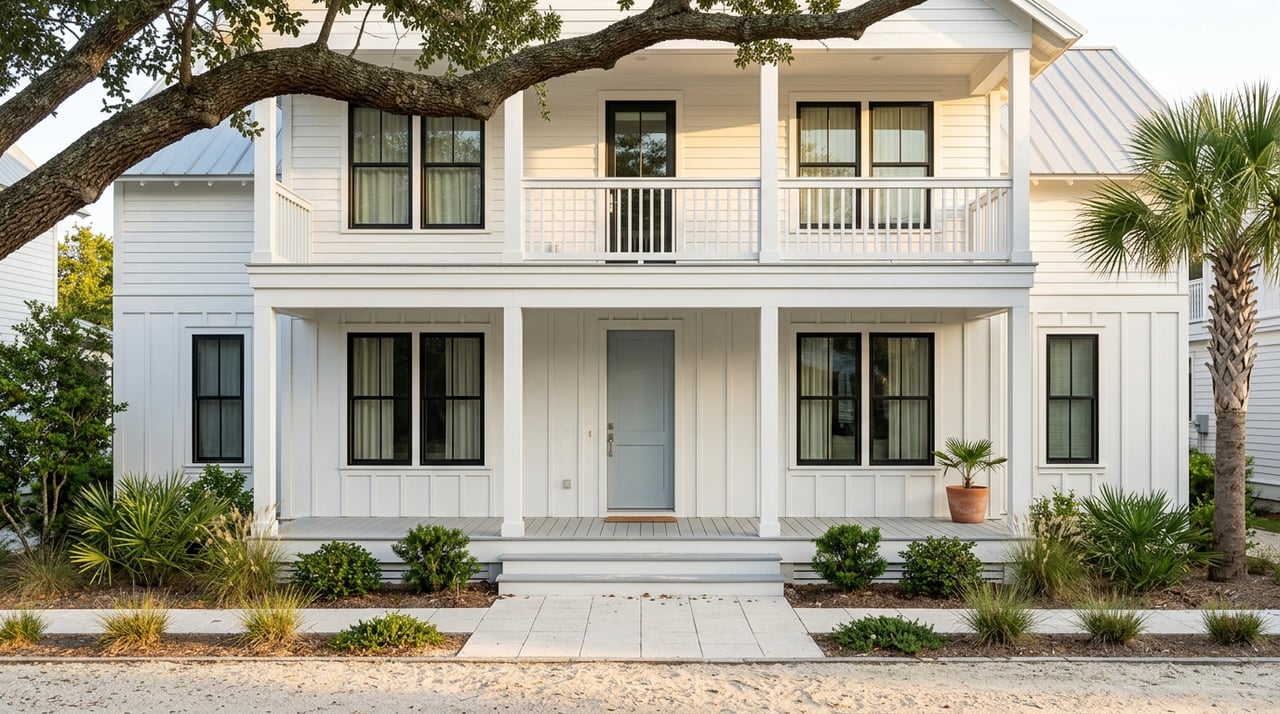
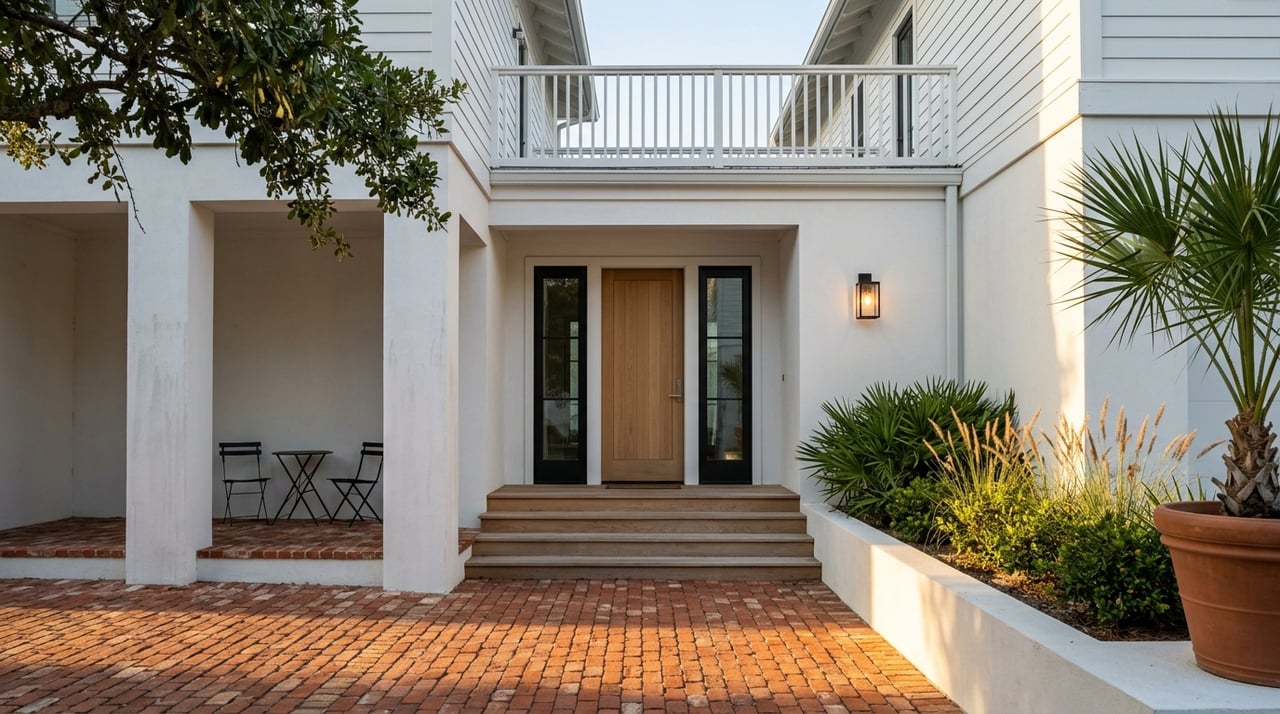
Official community materials point to influences from the Caribbean, West Indies, New Orleans, and St. Augustine. Across the neighborhood, you will see elevated masonry bases, porches, shuttered openings, steep roofs, deep eaves, and a mix of stucco, shingles, and siding details.
Key design features you will notice
- Street-facing homes that help shape a more active public realm
- Alley-loaded parking that keeps many garages and vehicles out of the main streetscape
- Porches and outdoor rooms that support coastal indoor-outdoor living
- Elevated bases and durable materials suited to a beachfront setting
- A coastal palette with controlled variation rather than random color choices
These details are not just decorative. Together, they create the visual rhythm that gives Rosemary Beach its distinct character and helps properties feel connected to a larger whole.
How Design Supports Daily Living
In Rosemary Beach, architecture is closely tied to routine. The community is threaded with native and coastal plantings like sea oats, lupine, saw palmettos, rosemary, and scrub oak, which helps everyday walks feel integrated with the natural setting rather than separated from it.
That matters because this is a place designed for movement on foot. The official community site says any point to any destination is about a five-minute walk, which changes how you experience a day here. Coffee, dinner, the beach, a park, or an evening stroll can all feel like part of one connected rhythm.
Everyday life tends to revolve around simple walkable patterns
- Morning coffee or breakfast in Town Center
- Midday beach time or pool time
- Afternoon walks through parks, paths, and boardwalks
- Casual shopping or errands close to home
- Dinner, rooftop dining, or a relaxed evening back in the core of town
For many buyers, that is the real value. You are not only buying a house or condo. You are buying into a physical environment that can make daily life feel easier, more social, and more connected.
The Role of Town Center
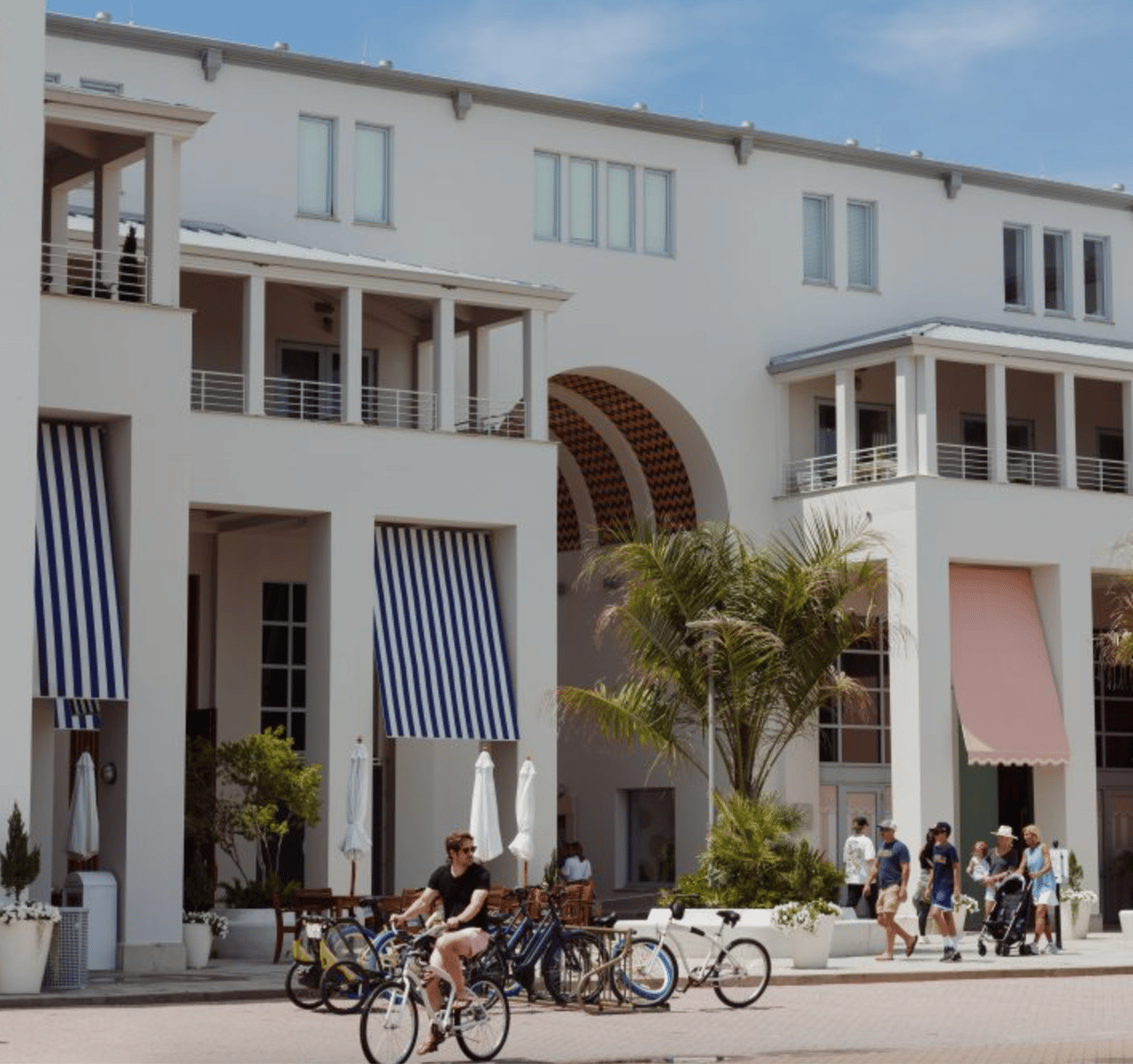
The Town Center is the heart of Rosemary Beach, both spatially and socially. Community materials describe it as the central hub, connected by meandering paths, boardwalks, and cobblestone streets that tie together Town Hall, the Post Office, green parks, restaurants, shops, and other businesses.
That mix of uses is a major part of why Rosemary Beach reads more like a compact village than a purely residential community. Current Town Center offerings include coffee shops, casual cafés, rooftop dining, boutiques, a bookstore, lodging, and spa services.
For a homeowner or second-home buyer, that can shape your experience in practical ways. You may be able to keep more of your day within the neighborhood, with fewer car trips and a stronger sense that everyday conveniences are built into the community itself.
Parks, Paths, and Shared Spaces
Public space is a defining feature of Rosemary Beach. The community includes Butterfly Garden, pocket parks, East and West Long Green Parks, Playground Park, St. Augustine Park, North Barrett Square, and shaded seating areas.
These spaces are not tucked away as background amenities. They are part of how the town functions and how residents and guests spend time outdoors beyond the beach itself.
Community spaces support a range of activities
- Picnics and casual outdoor reading
- Block parties and movie nights
- Ballet performances and concerts
- Walks between homes, parks, and Town Center
- Informal meetups with neighbors and guests
This public realm adds another layer to everyday coastal living. Even when you are not heading to the sand, there are built-in places to gather, pause, and enjoy the setting.
Walkability Is More Than a Selling Point
Many communities claim to be walkable, but in Rosemary Beach, walkability is part of the original planning logic. Brick sidewalks, winding paths, and boardwalk connections make walking feel intentional rather than secondary.
The community also includes a 2.3-mile Fitness Trail and Walking Tour with four fitness stations. In addition, Rosemary Beach maintains four pools, a fitness center, and a racquet club with eight Har-Tru courts.
For buyers comparing 30A communities, that is worth paying attention to. Walkability here is not just about being able to stroll once in a while. It is about how the town is structured to support daily use on foot, whether you are heading to dinner, working out, meeting friends, or taking a short loop through the neighborhood.
What to Know About Beach Access
Beach life is a major part of Rosemary Beach, but it is also managed in a specific way. The Property Owners Association states that homeowners and guests can access beach services such as chairs, umbrellas, tables, watercraft rentals, sunset setups, bonfires, and coolers through its beach service.
Just as important, Walton County’s beach parking guidance says Rosemary Beach does not have public beach access. The county’s beach-access map identifies Rosemary Beach among areas where rental and vacation properties offer exclusive beach access for guests, while nearby Inlet Beach provides regional public access and parking.
Why this matters for buyers
- Beach access expectations should be reviewed property by property
- Ownership or rental location can affect how beach use works in practice
- Guest access is not the same as open public access within Rosemary Beach itself
- Nearby public access options may matter if you are comparing communities
This is one of those details that can shape both lifestyle and purchase decisions. If beach access is central to your goals, it is worth understanding the specifics before you buy.
Ownership Comes With Design Oversight
One of the biggest practical considerations in Rosemary Beach is governance. According to the community’s architecture materials, the code governs development, construction, maintenance, landscaping, and design review, and compliance is administered by the Property Owners Association and Town Architect.
For you as a buyer, that means exterior changes, additions, and new construction happen within a regulated design environment. Some buyers see that as a major advantage because it helps preserve the visual consistency and architectural heritage of the community.
Others will want to weigh that structure carefully, especially if they hope to make extensive exterior changes over time. Either way, it is an important part of understanding what ownership here really looks like.
Why Buyers Are Drawn to Rosemary Beach
Rosemary Beach often appeals to buyers who want more than proximity to the Gulf. The combination of architecture, walkability, parks, Town Center activity, and managed beach experience creates a setting that feels intentional from the ground up.
That can matter whether you are buying a primary residence, second home, or investment-oriented property. In a coastal market where micro-location often shapes both lifestyle and long-term value, Rosemary Beach offers a very specific experience that is different from a typical subdivision or a more car-dependent beach area.
From a real estate perspective, that is why understanding the built environment matters. When a community’s design strongly influences daily routine, buyer expectations, and ownership rules, those factors become part of the property decision itself.
If you are weighing Rosemary Beach against other 30A communities, the key question is not just whether the homes are attractive. It is whether this blend of architecture, regulation, walkability, and coastal village living matches the way you actually want to use the property.
If you want clear guidance on how Rosemary Beach fits into the broader 30A market, Wayne West can help you evaluate lifestyle fit, ownership considerations, and the bigger real estate picture with a calm, informed approach.
FAQs
What does Rosemary Beach architecture look like?
- Rosemary Beach architecture draws from Caribbean, West Indies, New Orleans, and St. Augustine influences, with features like porches, elevated masonry bases, shuttered openings, steep roofs, deep eaves, and coordinated coastal materials and colors.
Is Rosemary Beach walkable for everyday living?
- Yes. Official community materials say most destinations are about a five-minute walk, with paths, boardwalks, brick sidewalks, parks, and Town Center uses all connected in a pedestrian-focused layout.
Does Rosemary Beach have public beach access?
- No. Walton County guidance says Rosemary Beach does not have public beach access, so beach use should be understood based on the specific property, guest status, and nearby access options such as Inlet Beach.
What can you do in Rosemary Beach besides go to the beach?
- Everyday options include coffee shops, dining, boutiques, a bookstore, parks, pools, the fitness trail, a fitness center, racquet facilities, and community events like concerts, movie nights, and other gatherings.
Do Rosemary Beach homeowners have to follow design rules?
- Yes. The community code governs development, construction, maintenance, landscaping, and design review, with oversight handled by the Property Owners Association and Town Architect.
Why do buyers compare Rosemary Beach differently from other 30A communities?
- Buyers often compare Rosemary Beach based on its specific mix of architecture, walkability, Town Center convenience, managed beach experience, and regulated design environment, all of which shape both daily lifestyle and ownership expectations.